


CMMI can be curiously difficult to 'pigeon-hole'...
CMMI is a process improvement model; a framework of industry ‘best practice’; a reference model against which organization’s can benchmark their processes and a structure that defines an evolutionary pathway towards ever increasing organizational capability.

The CMMI Model is supported by 4 other components and together they are collectively known as the ‘CMMI Performance Solutions Ecosystem’. These components allow the true value of the model to be fully realised by providing the necessary mechanisms to use the model effectively as an instrument of continuous improvement and organizational change.

In addition to the model itself, the ecosystem includes the following components:
Appraisal Method
The CMMI Appraisal method has evolved over the same time period as the model itself and is now a tried and tested approach to using the model to compare the operating processes of an organization to the practices within the CMMI Framework. The appraisal process is defined by the Method Definition Document (MDD) which identifies 4 distinct appraisal types that can be called upon to meet the specific needs of individual organizations at all stages of their improvement journey.
Training and Certification
The CMMI Institute have created a range of training courses and associated certifications to enable people to develop their knowledge in CMMI and to prepare them to use the model effectively
Systems and Tools
The model is supported by a suite of tools and systems which enable (for example) Instructors to plan and manage training courses and for Lead appraisers to plan and run appraisals.
Adoption Guidance
The CMMI Institute have collated experiences of the numerous organizations that have used and contributed to the CMMI to develop some adoption guidance for organizations new to the model. This adoption guide is freely available and outlines a typical six-stage process for bringing the CMMI model into a new organization.
The model itself is, at its heart, a collection of individual practice statements (276 in total at the time of writing - see our practice calculator to explore the breakdown of practices in the model). These statements each represent a practice which has been found to be a key characteristic of effective processes. The practices are organized into related groups known as Practice Areas and these practice areas form the main focus for most CMMI activities.
Practice areas are themselves organized into related groups known as Capability Areas and these in turn are organized into high level categories:

Practice Areas (PAs) are the primary organizing structure within the CMMI, collecting together as they do, groups of practices that are similar in terms of the subject matter to which they relate. There are 31 practice areas in the full CMMI model (each containing an average of 9 practices) and these are split into two main subsets.
17 Practice areas are known as ‘Core’ PAs. These areas have general applicability and act as a foundational layer for the 8 specialist domains. Irrespective of the type of work that an organization is involved, with, the Core PAs have relevance. For example, one core practice area is called ‘Planning’ and regardless of whether your organization is developing products or delivering services, planning will be a key part of the activity that you undertake.
The remaining 14 practice areas contain additional best practice information relating to the 8 specialist domains. Each domain has between 1 and 4 PAs that are applicable specifically to that domain.
Within each Practice Area, practices are organized into ‘levels’ known as Practice group levels. Depending on the practice area in question, there may be up to 5 practice group levels, with higher levels representing increased degrees of capability within the practice area. The concept of ‘Levels’ is an important one in CMMI and introduces us to one of the most famous elements of the CMMI: Maturity Levels.

Maturity Levels, put simply, are pre-defined groups of Practice areas which have all achieved a common practice group level (i.e. all the practices up to and including the target practice group level have been fully implemented in the organization’s processes). Hence an organization that has achieved Maturity Level 3 has demonstrated higher levels of capability and performance than one at Maturity Level 2.
This uplift in capability at higher levels of maturity is accompanied by certain characteristics that are typical of organizations operating at that level:
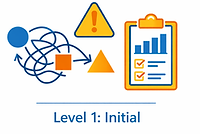
Level 1 is characterized as the ‘Initial’ level and is typical of an organization that is starting to implement process and performance management practices but has yet to fully formalise their approach at any level.
Level 2 is known as the ‘Managed’ level and is characterised by planned and managed processes at the project level. Individual projects or work units establish and follow their own processes that implement the level 2 practices of CMMI.


Level 3 is known as the ‘Defined’ level. The key characteristic of a Level 3 organization is that the processes are now defined at the organizational level and are continuously improved through usage. Individual projects take a standard, organizational process and tailor it to meet their specific needs.
Level 4 – the ‘Quantitatively Managed’ level represents a step change in organizational capability. Now the emphasis shifts onto establishing process performance models through statistical and other quantitative methods that can be used to understand, predict and manage variance in the performance of the organization.


The last maturity level – Level 5 is known as the ‘Optimizing’ level and is characterized by organization’s using their statistical process models to optimise their performance and fine tune their approach to achieving their quality and process performance objectives.
We have produced a useful wallchart to summarise some of the key concepts in CMMI and act as a useful reference resource when working with the model. You can download it by clicking on the image below:


